

What is the range of a water detector? Well, that's a question I get asked a lot as a water detector supplier. In this blog, I'm gonna break down the different factors that affect the range of a water detector and give you a better idea of what to expect.

First off, let's talk about what a water detector is. Simply put, it's a device that's used to detect the presence of water. There are different types of water detectors out there, and they work in various ways. Some use electrical conductivity, others use electromagnetic fields, and some rely on ultrasonic waves. Each type has its own pros and cons, and the range can vary significantly depending on the technology used.
One of the biggest factors that influence the range of a water detector is the type of environment it's used in. For instance, if you're using a water detector in an open field, the range is likely to be much greater than if you're using it in a confined space like a basement. In an open area, there are fewer obstacles to interfere with the detector's signals, allowing it to cover a larger area. On the other hand, in a basement, the walls, floors, and other structures can absorb or reflect the signals, reducing the effective range.
Another important factor is the depth at which you're trying to detect water. Different water detectors are designed to work at different depths. Some are only good for detecting surface water or water close to the surface, while others, like our Deep Water Detector, can penetrate deep into the ground to find water sources. The deeper you want to go, the more powerful the detector needs to be, and the more specialized the technology.

The quality and sensitivity of the detector also play a huge role in determining its range. A high - quality detector with advanced sensors and signal processing capabilities will generally have a greater range than a cheaper, less sophisticated model. At our company, we invest a lot of time and resources in research and development to ensure that our water detectors are top - notch in terms of quality and performance.
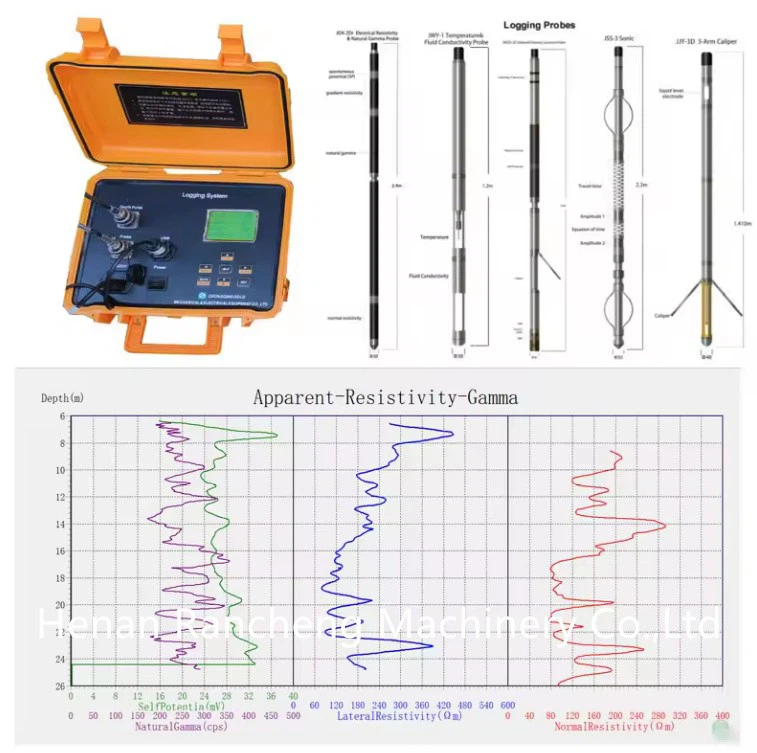
Let's take a closer look at some of the common types of water detectors and their typical ranges.
Surface Water Detectors
These are the most basic type of water detectors. They're usually used to detect water on the surface, such as in puddles, streams, or shallow ponds. Surface water detectors typically have a range of a few feet to maybe 10 or 15 feet, depending on the specific model. They're often used in applications like flood monitoring or environmental studies where you just need to know if there's water present in a relatively small area.
Shallow Sub - surface Water Detectors
These detectors are designed to find water that's just below the surface, usually within the top few meters of the ground. They're useful for things like agricultural irrigation planning or small - scale water well drilling. The range of shallow sub - surface water detectors can vary from around 3 to 10 meters. They use a combination of electrical conductivity and electromagnetic field sensing to detect the presence of water in the soil.

Deep Water Detectors
As the name suggests, deep water detectors are used to find water sources deep underground. These are the heavy - hitters in the water detection world. They can have ranges that extend from tens of meters to hundreds of meters, depending on the geological conditions and the power of the detector. Our Deep Water Detector is specifically engineered to handle these challenging deep - detection tasks. It uses state - of - the - art technology to penetrate through layers of rock and soil to locate hidden water sources.
In addition to the type and quality of the detector, the geological makeup of the area also impacts the range. For example, if the ground is made up of highly conductive materials like clay, it can enhance the detection range as the electrical or electromagnetic signals can travel more easily through it. On the other hand, if the ground is full of rocks or other non - conductive materials, the range may be reduced as the signals can get blocked or scattered.
Now, you might be wondering how these water detectors fit into the bigger picture of geophysical exploration. Well, water detectors are just one part of a larger suite of Geophysical Logging Equipment. This equipment is used to study the physical properties of the Earth, including the location and characteristics of water sources. Downhole logging tools, such as those found in our Downhole Logging Tools collection, are often used in conjunction with water detectors to get a more detailed understanding of the subsurface conditions.
So, whether you're a farmer looking for a reliable water source for your crops, a well - drilling company in need of accurate water detection, or a researcher studying groundwater resources, having the right water detector with an appropriate range is crucial.
If you're interested in learning more about our water detectors and how they can meet your specific needs, don't hesitate to reach out. We're always happy to have a chat about your requirements and help you find the best solution for your water detection challenges. Whether it's a small - scale project or a large - scale industrial application, we've got the expertise and the products to support you.
In conclusion, the range of a water detector can vary widely depending on the type of detector, the environment it's used in, the depth of detection, and the geological conditions. By understanding these factors, you can make a more informed decision when choosing a water detector for your project.
References
- Geophysical exploration textbooks
- Industry reports on water detection technology