

As an air compressor supplier, one of the most frequently asked questions by our customers is about the power consumption of air compressors. Understanding how much power an air compressor consumes is crucial for both cost - effectiveness and efficient operation. In this blog, we'll delve into the factors that influence an air compressor's power consumption and provide insights to help you make informed decisions.
Factors Affecting Air Compressor Power Consumption
Type of Air Compressor
There are various types of air compressors available in the market, each with its own power consumption characteristics.
-
Portable Air Compressor On Wheels: These are typically smaller and designed for light - duty applications. They are often used in home workshops, small construction sites, or for inflating tires. Portable air compressors on wheels are usually powered by electricity. Their power consumption is relatively low, generally ranging from 1 to 3 horsepower (HP). For example, a small portable air compressor with a 1 - HP motor might consume around 746 watts (since 1 HP is approximately 746 watts) when running at full load. You can find more information about Portable Air Compressor On Wheels.
-
Rotary Air Compressor: Rotary air compressors are commonly used in industrial settings due to their high - volume and continuous - operation capabilities. They come in two main types: rotary screw and rotary vane compressors. Rotary screw compressors are more energy - efficient compared to some other types. A typical small - to - medium - sized rotary screw compressor with a power rating of 5 to 10 HP can consume between 3730 to 7460 watts at full load. The power consumption of Rotary Air Compressor can vary depending on factors such as the compression ratio, air flow rate, and the efficiency of the motor.
-
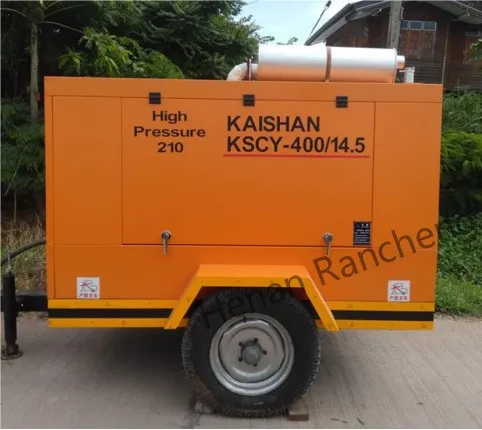
Diesel Screw Compressor: Diesel screw compressors are often used in remote locations where electricity is not readily available. They are powered by diesel engines, and their power consumption is measured in terms of fuel consumption. The fuel consumption of a diesel screw compressor depends on its size and the load it is operating under. A medium - sized diesel screw compressor might consume around 1 to 2 gallons of diesel per hour when running at full load. To learn more about Diesel Screw Compressor.
Compression Ratio
The compression ratio is the ratio of the discharge pressure to the suction pressure of the air compressor. A higher compression ratio means that the compressor has to work harder to compress the air, which in turn increases power consumption. For example, if an air compressor is required to compress air from atmospheric pressure (about 14.7 psi) to 100 psi, the compression ratio is approximately 6.8 (100/14.7). As the compression ratio increases, the power required to achieve the same air flow rate also goes up.
Air Flow Rate (CFM - Cubic Feet per Minute)
The air flow rate, measured in cubic feet per minute (CFM), is another important factor. The more air an air compressor needs to deliver, the more power it will consume. For instance, a compressor that is required to provide 10 CFM of compressed air will generally consume less power than one that needs to supply 20 CFM, assuming all other factors are the same.
Efficiency of the Compressor
The efficiency of an air compressor is determined by how well it converts electrical or fuel energy into compressed air energy. Modern air compressors are designed to be more energy - efficient, with features such as variable - speed drives (VSD). VSD compressors can adjust their motor speed according to the demand for compressed air, which helps to reduce power consumption during periods of low demand. Older or less - efficient compressors may waste energy through heat loss, leaks, and mechanical inefficiencies.
Calculating Power Consumption
To calculate the power consumption of an electric air compressor, you can use the following formula:
Power (Watts) = Voltage (Volts) x Current (Amperes)
If you know the horsepower rating of the compressor, you can convert it to watts using the conversion factor of 1 HP = 746 watts.

For diesel - powered air compressors, you need to refer to the manufacturer's specifications for fuel consumption rates. These rates are usually provided in gallons per hour (GPH) at different load levels.
Strategies to Reduce Power Consumption
- Proper Sizing: Select an air compressor that is appropriately sized for your application. An oversized compressor will consume more power than necessary, while an undersized compressor may not be able to meet the demand and may have to run continuously, also leading to higher power consumption.
- Regular Maintenance: Keep your air compressor well - maintained. This includes changing filters, checking for leaks, and lubricating moving parts. A well - maintained compressor operates more efficiently and consumes less power.
- Use of VSD: If possible, opt for air compressors with variable - speed drives. VSD compressors can significantly reduce power consumption by adjusting the motor speed based on the air demand.
- Optimize Compression Ratio: Try to keep the compression ratio as low as possible while still meeting your application requirements. This can be achieved by adjusting the system pressure or using multiple - stage compression.
Conclusion
Understanding the power consumption of air compressors is essential for managing costs and ensuring efficient operation. By considering factors such as the type of compressor, compression ratio, air flow rate, and efficiency, you can make more informed decisions when purchasing an air compressor. As a trusted air compressor supplier, we are committed to providing high - quality products that are energy - efficient and reliable.
If you are interested in learning more about our air compressors or have specific requirements for your application, we encourage you to contact us for a detailed discussion. Our team of experts is ready to assist you in selecting the right air compressor and helping you optimize its power consumption.
References
- ASHRAE Handbook of Refrigeration
- Compressed Air and Gas Institute (CAGI) publications
- Manufacturer's technical manuals for air compressors