

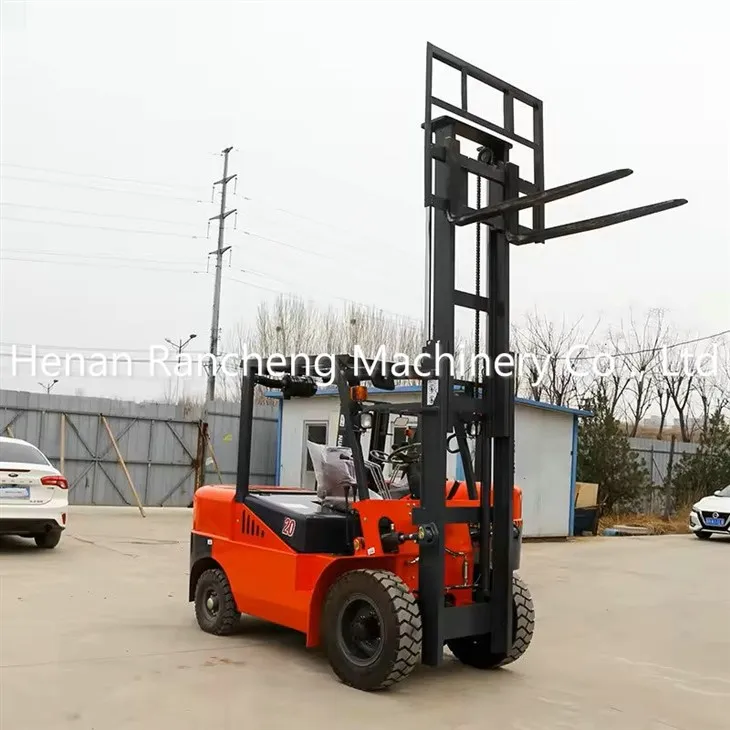
As a supplier of 2.5t forklifts, I often get asked whether our forklifts can be used in a textile mill. This is a valid question, as textile mills have unique requirements and environments that need to be considered when choosing the right forklift. In this blog post, I'll explore the suitability of a 2.5t forklift for textile mills, discussing the key factors and providing insights to help you make an informed decision.
Understanding the Textile Mill Environment
Textile mills are dynamic workplaces where raw materials like cotton, wool, and synthetic fibers are transformed into finished textile products. These facilities typically involve large volumes of materials, from bales of raw fibers to rolls of finished fabric. The layout of a textile mill can be complex, with narrow aisles in storage areas and production floors that require careful maneuvering.
One of the primary concerns in a textile mill is the protection of the products. Textiles are often delicate and can be easily damaged by rough handling. Therefore, any equipment used in the mill, including forklifts, must be able to operate with precision and care.
Advantages of Using a 2.5t Forklift in a Textile Mill
Capacity and Versatility
A 2.5t forklift offers a good balance between capacity and maneuverability. In a textile mill, there are various tasks that require moving different loads. For example, bales of raw fibers can be quite heavy, and a 2.5t forklift can easily handle these larger loads. At the same time, it can also be used for moving smaller rolls of fabric or other equipment around the mill. This versatility makes it a valuable asset in a textile mill, as it can perform multiple tasks without the need for different types of forklifts.
Maneuverability
Many modern 2.5t forklifts are designed with advanced steering systems and compact dimensions, allowing them to navigate through narrow aisles and tight spaces commonly found in textile mills. This is crucial for efficient material handling, as it enables the forklift to access storage areas and production lines without causing disruptions. For instance, in a storage area where bales of fibers are stacked closely together, a 2.5t forklift can easily pick up and move the bales without knocking over adjacent ones.
Safety Features
Safety is of utmost importance in any industrial environment, and textile mills are no exception. A 2.5t forklift can be equipped with a range of safety features such as anti-rollover protection, seat belts, and visibility enhancements. These features help to protect the operator and prevent damage to the products being handled. For example, a forklift with good visibility allows the operator to see clearly around the forklift, reducing the risk of collisions with other equipment or workers in the mill.
Considerations When Using a 2.5t Forklift in a Textile Mill
Floor Conditions
Textile mills may have different types of floor surfaces, including smooth concrete or epoxy-coated floors. It's important to ensure that the forklift's tires are suitable for the floor conditions. For example, if the floor is slippery, forklifts with special non-slip tires should be used to prevent accidents. Additionally, the weight of the forklift and its load can put stress on the floor, so it's necessary to check the floor's load-bearing capacity to avoid damage.
Dust and Fiber Management
Textile mills generate a significant amount of dust and fibers during the production process. These particles can accumulate on the forklift and potentially cause damage to its components. To address this issue, the forklift should be equipped with appropriate air filters and be regularly cleaned. Some forklifts also have enclosed cabs to protect the operator from the dust and fibers.
Noise Levels
Noise can be a problem in a textile mill, especially if workers are constantly exposed to high levels of noise. When choosing a 2.5t forklift, it's advisable to select a model with low noise emissions. This not only creates a more comfortable working environment for the operators but also helps to comply with noise regulations in the workplace.
Comparing with Other Forklift Capacities
While a 2.5t forklift has many advantages for textile mills, it's also worth considering other forklift capacities. For lighter loads, a 1.6T Forklift may be more suitable. It offers better maneuverability in extremely narrow spaces and is more energy-efficient for small loads. On the other hand, if there are occasional very heavy loads, a 2.6T Forklift could be a better option. It provides a slightly higher capacity while still maintaining reasonable maneuverability. A 2T Forklift is also a popular choice for textile mills with relatively lighter and more frequent loads. It strikes a balance between capacity and cost, and is often more affordable to purchase and operate.

Conclusion
In conclusion, a 2.5t forklift can be a great choice for a textile mill. Its capacity, maneuverability, and safety features make it well-suited for the various tasks involved in material handling in a textile mill. However, it's important to consider the specific requirements of the mill, such as floor conditions, dust and fiber management, and noise levels. By carefully evaluating these factors and comparing different forklift capacities, you can make an informed decision on whether a 2.5t forklift is the right fit for your textile mill.
If you're interested in learning more about our 2.5t forklifts or discussing your specific needs for a textile mill, I encourage you to reach out to us. Our team of experts is ready to provide you with detailed information and assist you in finding the perfect forklift solution for your business.
References
- OSHA guidelines on industrial forklift safety
- Textile mill operation and safety manuals
- Forklift manufacturer product specifications and brochures