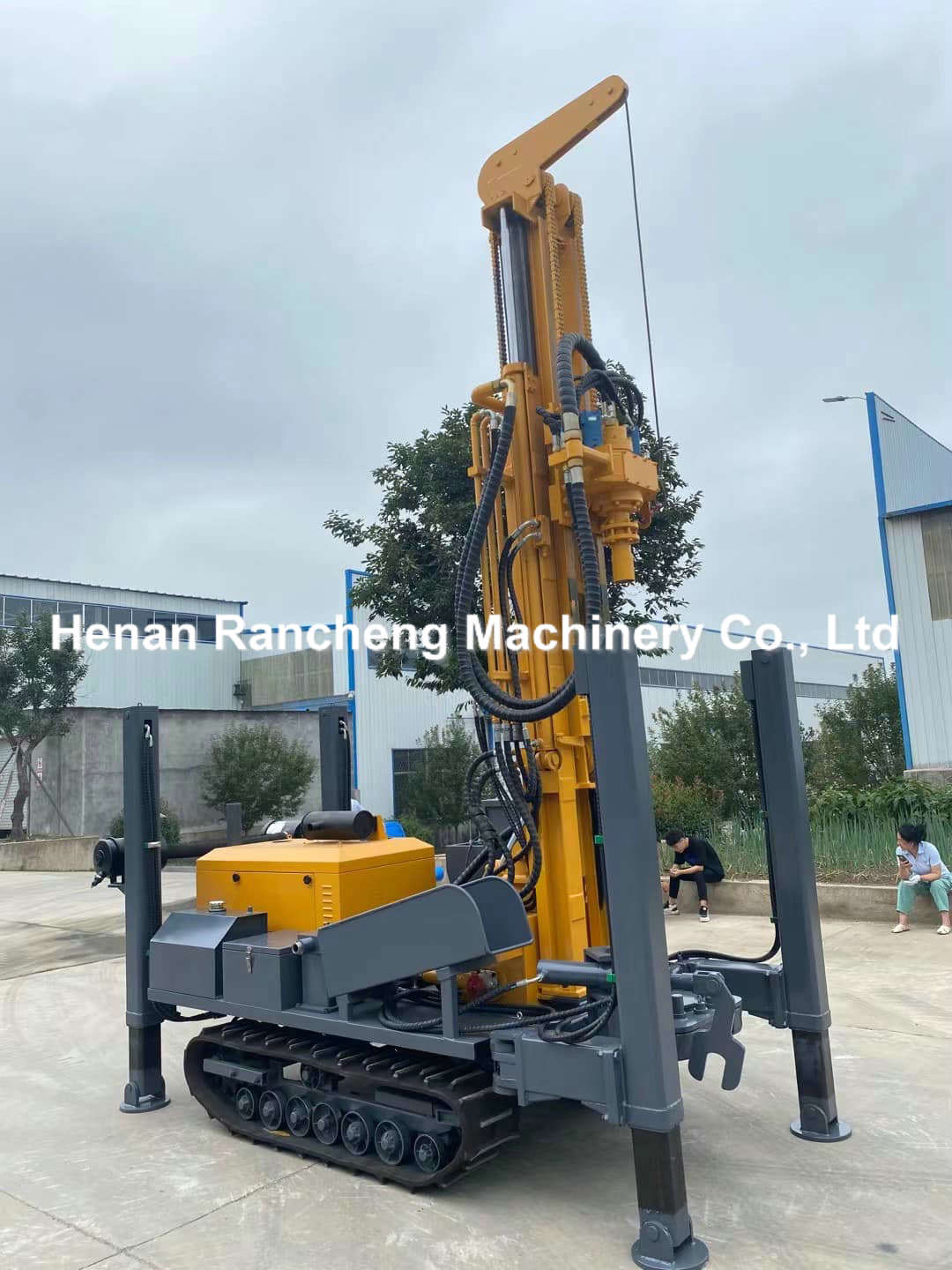
How to choose the right water well drilling rig?
Introduction
Water well drilling rigs play a vital role in modern society. With global climate change and population growth, the demand for water resources is increasing, and groundwater has become an important water source to support communities, agriculture, and industry. As an efficient tool, water well drilling rigs can help develop underground aquifers and ensure that the water needs of different fields are met. From shallow to deep well drilling projects, water well drilling rigs continue to provide solid guarantees for global water security with their diversity and efficiency. This article aims to provide a detailed analysis of the various types and components of water well drilling rigs. It will also highlight their practical applications and importance in the development of water resources, ultimately emphasizing their value in promoting sustainable water management.
1. What is a water well drilling rig?
A water well drilling rig is a specialized heavy machine designed to drill groundwater sources to provide safe drinking water and working water for communities, industries and agriculture. These rigs are designed according to different drilling depths and geological conditions. The main components of a water well drilling rig include:
- Drill bit: The drill bit is a tool used to break the formation during the drilling process, and different types can be selected according to the geological conditions.
- Drill string: The drill string is a series of connected drill rods that transmit power from the ground to the drill bit and withstand huge pressure during the drilling process.
- Lifting system: The system controls the lifting and lowering of the drill string and drill bit through a hydraulically driven winch or hoist.
- Rotation system: The rotation system provides the rotational power required by the drill bit and is usually driven by a hydraulic motor.
2. Types of water well drilling rigs
Water well drilling rigs can be divided into many types according to different drilling methods, depth capabilities, and mobility. The following are some common ones:
- Rotary drilling rigs
Rotary drilling rigs cut the formation by rotating the drill bit, which is suitable for various geological structures and has high drilling efficiency.
- Percussion drilling rigs
Percussion drilling rigs use percussion or hammering actions to drill rock formations, which are suitable for hard or compacted geological conditions.
- Cable tool drilling rigs
This type of drilling rig repeatedly lifts and lowers a chisel-like drill bit through a cable and is used in softer formations.
- Portable and truck-mounted drilling rigs
Suitable for transportation to remote areas, portable drilling rigs are smaller, while vehicle-mounted drilling rigs have higher drilling capabilities.
3. Water well drilling rigs under different classification standards
According to drilling methods
- Rotary drilling rigs: They break rocks by rotation and are suitable for various formations.
- Percussion drilling rigs: They rely on up and down reciprocating motion to drill and are simple to operate.
- Compound drilling rigs: They combine rotation and impact and are highly adaptable.
According to power sources
- Diesel engine-driven drilling rigs: They are easy to move, but have higher emissions.
- Electric motor driven drilling rig: environmentally friendly, but requires power support.
- Hydraulic driven drilling rig: flexible operation and high efficiency.
By drilling depth
- Shallow drilling rig: suitable for depths of tens to hundreds of meters.
- Deep drilling rig: suitable for deep wells of hundreds to thousands of meters.
Other categories
- By drilling fluid: such as mud drilling, air drilling, etc.
- By drilling method: including positive circulation and reverse circulation drilling.
4. Application of water well drilling rigs
Water well drilling rigs are not only crucial in drinking water supply, but also play an important role in agriculture, industry, mining, environmental protection and emergency response:
- Agriculture: provide irrigation water to ensure crop growth and food production.
- Industry: support the cooling and cleaning systems of the manufacturing industry.
- Mining: used for water supply in mineral mining and processing.
- Environmental protection: monitor and protect groundwater levels and quality.
- Emergency response: quickly provide water support in natural disasters.
5. Future prospects of water well drilling rigs
With the advancement of technology, water well drilling rigs are gradually moving towards an efficient and environmentally friendly development path. In the future, water well drilling rigs will continue to play an important role in water resource management to better serve communities and support sustainable development.
Summary
Water well drilling rigs are important tools for water resource development. With their various types and functions, they play an indispensable role in meeting human water needs. Whether it is drinking water supply in remote areas, agricultural irrigation or industrial production, water well drilling rigs are silently supporting the development of society.