


In modern cities, underground utilities are the quiet backbone of everyday life-delivering water, power, communications, and fuel without disturbing the world above. As infrastructure becomes denser and environmental requirements grow stricter, the ability to install pipelines without open-cut excavation has shifted from a technological advantage to an industry standard.
For years, we've relied on HDD drilling as one of our most versatile trenchless construction methods, allowing us to cross roads, railways, rivers, wetlands, and protected areas while keeping traffic, communities, and ecosystems untouched. Today, we'd like to walk you through what HDD Drilling is, why it has become essential in underground utility installation, and how we execute a complete HDD drilling project-from the first pilot hole to the final pipe pullback.
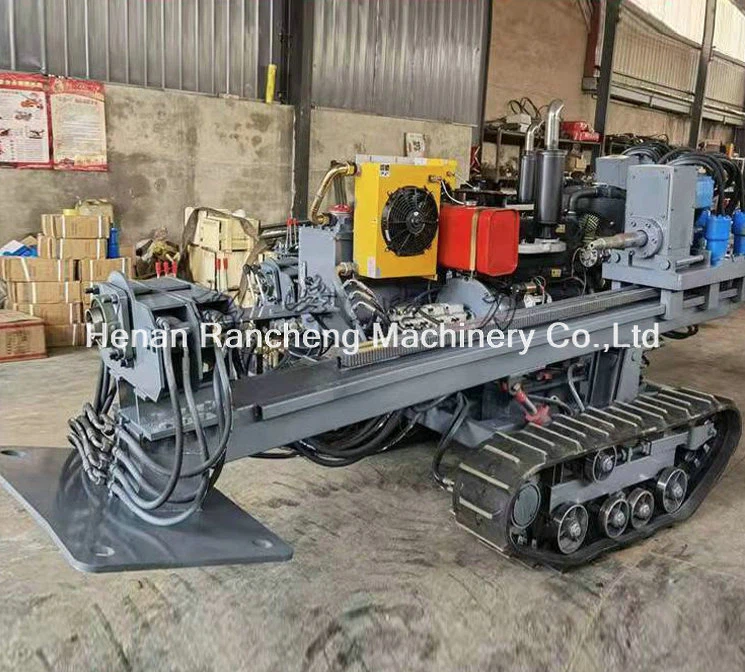
What Is HDD Drilling? And Where Do We Use It?
HDD Drilling is a trenchless installation technique that allows us to place pipelines and cables below the ground surface without excavation. Instead of opening a long trench, we drill a controlled, guided underground path and pull the product pipe through it.
Because HDD drilling requires only small entry and exit work areas, it's especially used for:
♦ Urban streets with heavy traffic
♦ Areas with dense existing utilities
♦ River, highway, and railway crossings
♦ Environmental protection zones and sensitive habitats
Like any method, HDD drilling has preferred working conditions. Soft soils-such as clay, silt, and sand-offer ideal drilling environments. Highly cobbled ground or fractured formations are still workable but demand additional tooling, drilling fluids, and risk control. Most non-rock formations allow HDD to perform reliably and efficiently.
Why We Choose HDD Drilling?
Compared with traditional open-cut construction, HDD drilling offers a set of benefits that directly address today's engineering and environmental challenges.
Minimal Impact on Surface Activities
Because HDD drilling keeps the work underground, we don't disrupt traffic, damage streets, or disturb neighborhoods and businesses. Daily life continues above while work progresses quietly below.
High Accuracy Through Guided Drilling
Modern locating systems allow us to track drilling depth, inclination, and azimuth in real time. With continuous feedback, we can adjust the drill head to follow even complex alignment requirements-critical in crowded underground corridors.
Flexible Depth Control for Different Scenarios
Urban pipe networks often require burial depths of 3 meters or more; river crossings typically range from 9 to 18 meters below the riverbed. HDD drilling allows us to set these depths precisely and maintain them along the alignment.
No Disturbance to Waterways
For river and lake crossings, HDD drilling eliminates the need for cofferdams, dredging, or in-water construction. Navigation, embankments, and aquatic habitats remain fully protected.
Efficient Use of Limited Working Space
In tight urban lots or confined construction zones, we can position drilling equipment flexibly and complete crossings with very small site footprints.
Controlled Borehole Enlargement
Before pipe installation, we enlarge the pilot hole to approximately 1.3–1.5 times the product pipe diameter. This controlled reaming ensures adequate clearance and reduces installation risk.
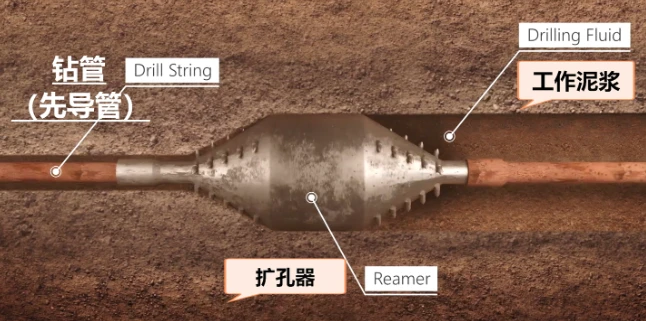
How HDD Drilling Works: From Pilot Hole to Pipe Pullback
Whether we're crossing a river, a highway, or a protected ecological zone, our HDD drilling workflow follows a three-step process:
Step 1: Pilot Hole Drilling - Establishing the Path
The pilot hole defines the exact underground trajectory. We use a small-diameter drill head capable of steering, equipped with:
● A directional drilling face for steering corrections
● A tracking transmitter that provides real-time position data
The guidance system transmits depth and heading information to the surface receiver, where operators continuously monitor and adjust the drill's direction. This ensures we follow the engineered alignment and avoid subsurface obstacles or existing utilities.
Step 2: Hole Reaming - Expanding the Bore to Final Size
Once the pilot hole reaches the exit point, we attach a reamer and begin enlarging the borehole by pulling the drill string back toward the rig. Depending on the soil conditions and the required final diameter, we may perform multiple reaming passes.
Our goal is to achieve a smooth, stable borehole with enough clearance for the product pipe and sufficient drilling fluid support.
Step 3: Pipe Pullback - Installing the Pipeline in One Continuous Operation
After reaming, we connect the pre-assembled pipe string to the drill string through a swivel. The swivel prevents rotational force from transferring to the pipe while allowing the drill rig to pull it into place smoothly.
In complex or unstable formations, we may incorporate additional stabilizers or a combined reamer-swivel setup to keep the pullback load within safe limits and prevent pipe damage.
When the pipe arrives at the entry point, installation is complete-without ever opening the ground above.
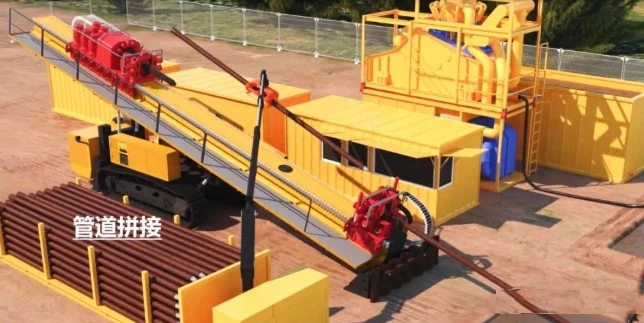
Horizontal Directional Drilling has changed how we build pipeline corridors. By combining precision guidance and minimal surface disturbance, HDD drilling enables us to deliver infrastructure where traditional excavation would be impractical or damaging.
As urban networks expand and environmental standards intensify, we believe HDD drilling will continue to evolve-becoming even more precise, more efficient, and more adaptable. We're committed to advancing HDD technology with equipment that delivers safety, precision, and long-term reliability in the field. As a dedicated manufacturer of horizontal directional drilling rigs, we support contractors and project owners with dependable machines built for real-world conditions.
If you're looking for technical guidance or a suitable HDD drilling rig for your next project, our team is ready to assist.


