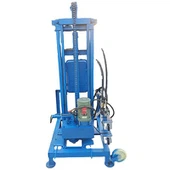
Water well drilling rigs are key equipment in drilling projects. Due to long-term and high-intensity operation, various mechanical, electrical, or hydraulic issues are inevitable. This article provides a detailed troubleshooting guide with practical repair techniques to help operators restore equipment functionality quickly and safely.
Failure 1: Insufficient Hydraulic Pressure (Weak System Power)
Symptoms:
Rig actions are weak, and the pressure gauge reads less than 80% of the rated value.
Troubleshooting & Fix:
- Adjust the Pressure Valve Limit Nut: Use a torque wrench to turn the limit nut counterclockwise to increase pressure.
- Replace Fatigued Spring: If the spring is deformed or broken, replace it with a model-matched one.
- Inspect Valve Cone: If damaged or stuck, disassemble and clean the pressure valve sleeve, and replace if needed.
Pro Tip:
Release system pressure before disassembly to avoid hydraulic oil spray.

RCF350C water well drilling rig
Failure 2: Winch Slippage (Brake Failure)
Symptoms:
The steel rope slips while lifting heavy loads, and the winch sounds abnormal or free-spinning.
Quick Fix (30-Second Solution):
- Clean Brake Pads: Use alcohol to clean off oil stains (avoid diesel or oil).
- Adjust Clearance: Set brake pad clearance to 1–2mm using a feeler gauge for accuracy.
Pro Tip:
Video tutorial available for feeler gauge usage and brake pad adjustment.
Failure 3: Oil Pump Not Delivering Oil (Pump Malfunction)
Symptoms:
No hydraulic response or delayed actions after pump starts.
3-Step Troubleshooting:
- Check Oil Level: Make sure oil level is within range (varies between seasons).
- Inspect Filter: Remove and clean the oil filter using diesel (reverse flush recommended).
- Check for Air Leaks: Apply soapy water to suction joints to check for leaks. Tighten or replace seals if needed.
Failure 4: Coupling Overheating (Transmission Issues)
Symptoms:
Coupling becomes extremely hot after operation, accompanied by noise or vibration.
Fix:
- Check for worn rubber pads, and replace if necessary.
- Verify engine-clutch alignment. Reinstall if shaft misalignment is found.

RCF200WT water well drilling rig
Failure 5: Drill Bit Stuck or Rod Breakage
Symptoms:
Drill rods cannot move up or down; rotary motion is blocked.
Root Causes & Solutions:
- Bit Stuck: Usually due to hard rock or bent rods. Try gently lifting and lowering. If stuck, use a shock-release tool.
- Rod Breakage: Stop drilling immediately. Retrieve the broken part using a fishing tool, then replace the rod.
Failure 6: Mud-Wrapped Drill Bit & Hole Deviation
Symptoms:
Slow penetration speed; drill bit comes out heavily coated in mud.
Fix:
- Pull out and clean the bit.
- Adjust mud density and viscosity; reduce water loss to improve chip removal.
- For deviated holes, realign the rig, backfill the deviated section, and restart drilling.
Failure 7: Clutch Slippage & Overheating
Causes & Fixes:
- Worn clutch plates → Replace plates.
- Spring fatigue or breakage → Replace the full set of clutch springs.
Failure 8: No Water Supply or Interrupted Flow (Bit Burn Risk)
Troubleshooting:
- Check for air leaks in the suction pipe.
- Inspect the impeller for damage.
- Examine the outlet for blockages.
If water flow stops, drilling must stop immediately to avoid bit burnout.
Failure 9: Borehole Collapse or Circulation Loss
Symptoms:
Rapid mud loss, enlarged borehole diameter, or wall collapse.
Response:
- Use sawdust + cement slurry for plugging.
- Increase mud weight to strengthen wall support.
- Use casing pipes if necessary to reinforce walls.
Failure 10: Slow Drilling Progress (Low Efficiency)
Possible Causes:
- Worn-out or mismatched drill bit;
- Hard rock formation requiring high-strength bits;
- Incorrect pressure or speed settings.
Suggestions:
- Replace drill bits regularly.
- Use alloy bits for hard formations.
- Adjust drilling parameters based on strata (speed, weight-on-bit, etc.).
Water well drilling rigs require regular inspection after every 100 hours of operation. Check oil levels, connections, brakes, and filters before each job. Mastering the above troubleshooting steps, along with hands-on techniques, can greatly reduce downtime and extend the rig's service life.