

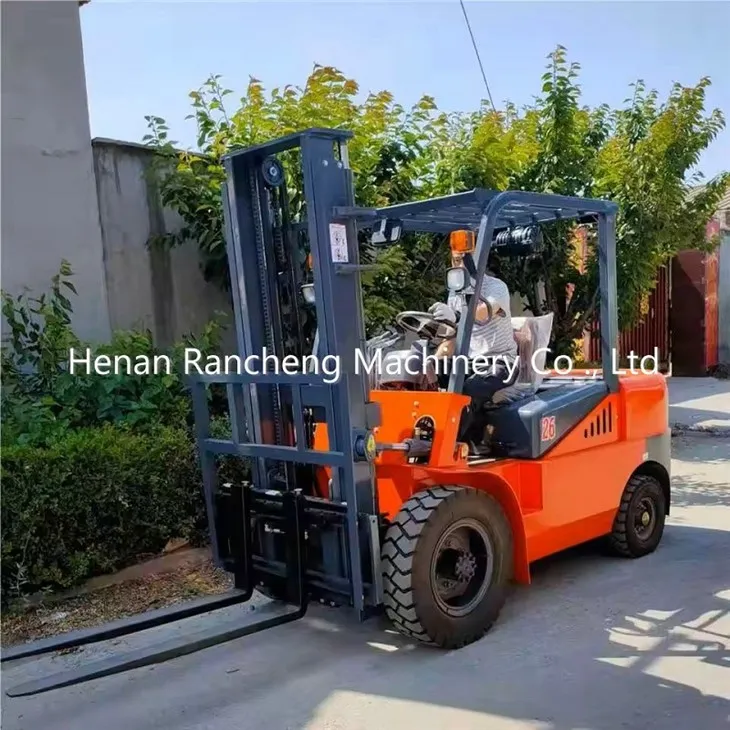
When it comes to industrial equipment, forklifts play a crucial role in various sectors, from warehouses to construction sites. As a supplier of 2.5t forklifts, I often get asked about the lifting speed of these machines. Understanding the lifting speed is essential for businesses to optimize their operations, improve efficiency, and ensure safety. In this blog post, I'll delve into the factors that influence the lifting speed of a 2.5t forklift, typical lifting speed ranges, and how it impacts your business.
Factors Influencing Lifting Speed
1. Hydraulic System
The hydraulic system is the heart of a forklift's lifting mechanism. It uses hydraulic fluid to transmit power and lift heavy loads. The design and quality of the hydraulic pump, cylinders, and valves significantly affect the lifting speed. A high - performance hydraulic system with a powerful pump can deliver more fluid to the cylinders at a faster rate, resulting in quicker lifting. For example, forklifts equipped with advanced variable - displacement pumps can adjust the flow rate according to the load, providing optimal lifting speed in different scenarios.
2. Load Weight
Naturally, the weight of the load being lifted has a direct impact on the lifting speed. A 2.5t forklift is designed to handle loads up to 2.5 tons. When lifting lighter loads, the forklift can operate at a faster speed because there is less resistance on the hydraulic system. As the load approaches the maximum capacity of 2.5 tons, the lifting speed will decrease due to the increased pressure required to lift the heavier weight.
3. Forklift Design and Model
Different forklift models have different lifting speed capabilities based on their design. Some forklifts are engineered for high - speed operations, while others prioritize stability and precision. For instance, forklifts with a more streamlined mast design may experience less friction during the lifting process, allowing for faster movement. Additionally, newer models often incorporate advanced technologies that can enhance lifting speed compared to older counterparts.
4. Operator Skill
The skill of the forklift operator also plays a role in the effective lifting speed. An experienced operator knows how to handle the controls efficiently, make smooth starts and stops, and optimize the use of the forklift's features. On the other hand, an inexperienced operator may cause delays due to improper handling of the controls or hesitation in decision - making.
Typical Lifting Speed Ranges
The lifting speed of a 2.5t forklift can vary depending on the factors mentioned above. Generally, for light loads (less than 1 ton), the lifting speed can range from 30 to 60 meters per minute. As the load increases, the speed will gradually decrease. When lifting a full - capacity load of 2.5 tons, the lifting speed may drop to around 15 to 30 meters per minute.
It's important to note that these are just approximate ranges, and actual lifting speeds can vary between different forklift brands and models. Some high - end 2.5t forklifts may offer faster lifting speeds, especially those designed for high - volume operations.
Impact on Business Operations
1. Productivity
Lifting speed directly affects the productivity of a warehouse or industrial operation. A faster - lifting forklift can move more loads in a shorter period, reducing the time required to complete tasks. This can lead to increased throughput, allowing businesses to handle more orders and improve overall efficiency. For example, in a busy distribution center, a forklift with a higher lifting speed can quickly load and unload trucks, minimizing waiting times and ensuring a smooth flow of goods.
2. Cost - Efficiency
Improved productivity through faster lifting speeds can also translate into cost - efficiency. By reducing the time spent on each lifting operation, businesses can save on labor costs. Additionally, faster forklifts can potentially reduce the number of forklifts needed in a fleet, resulting in lower equipment acquisition and maintenance costs.
3. Safety
While high lifting speed can be beneficial for productivity, it's crucial to ensure that safety is not compromised. Forklifts operating at high speeds need to be carefully controlled to prevent accidents. Operators should be trained to handle the forklift safely at different speeds, and the workplace should have appropriate safety measures in place, such as speed limits and clear signage.
Comparison with Other Forklift Capacities
If you're considering different forklift capacities for your business, it's interesting to compare the lifting speeds of a 2.5t forklift with other common capacities. A 5T Forklift, for example, is designed to handle heavier loads. Due to the increased load capacity, its lifting speed is generally slower than that of a 2.5t forklift, especially when lifting near its maximum capacity. On the other hand, a 2.6T Forklift has a slightly higher capacity than a 2.5t forklift. The lifting speed difference between a 2.5t and a 2.6t forklift may be minimal, but it can still vary depending on the specific models and their design features.
Choosing the Right Forklift for Your Needs
When selecting a 2.5t forklift, lifting speed is just one of the factors to consider. You also need to evaluate other aspects such as load capacity, maneuverability, fuel type, and maintenance requirements. If your business requires fast - paced operations with a significant amount of light - to - medium - weight lifting, a forklift with a higher lifting speed may be more suitable. However, if you need to handle heavier loads more frequently, you may need to prioritize stability and lifting power over speed.
As a supplier of 2.5T Forklifts, I can offer a wide range of models with different lifting speed capabilities. Our team of experts can help you assess your specific requirements and recommend the most appropriate forklift for your business. Whether you're looking for a high - speed forklift for a busy warehouse or a more stable model for a construction site, we have the solution for you.
Contact Us for Procurement
If you're interested in learning more about our 2.5t forklifts or have any questions regarding lifting speed and other features, don't hesitate to contact us. We're here to provide you with detailed information, arrange product demonstrations, and assist you in making the right purchasing decision. Our goal is to help your business operate more efficiently and effectively with the right forklift equipment.

References
- Forklift Industry Standards and Guidelines.
- Technical specifications of various 2.5t forklift models.
- Industry research on forklift performance and productivity.