

When it comes to material handling in warehouses, factories, and distribution centers, two commonly used pieces of equipment are the 1.6t forklift and the pallet jack. As a supplier of 1.6t forklifts, I often get asked about how these two compare. In this blog post, I'll delve into the key aspects of both, highlighting their differences, advantages, and when each is the better choice.
1. Lifting Capacity
The most obvious difference between a 1.6t forklift and a pallet jack lies in their lifting capacity. A 1.6t forklift, as the name suggests, can lift loads up to 1.6 metric tons (or 1600 kilograms). This makes it suitable for handling heavier and larger pallets, as well as items that are not neatly stacked on pallets. For example, in a construction materials warehouse, a 1.6t forklift can easily lift bundles of steel bars or large bags of cement.
On the other hand, a standard pallet jack typically has a lifting capacity ranging from 1 to 2 tons, with most common models around 2 tons. However, in practical use, pallet jacks are often used for lighter loads, usually up to 1 ton. They are designed mainly for moving pallets within a relatively small area, such as from a storage rack to a loading dock. If you need to handle a load that is close to or exceeds 1.6 tons, a 1.6t forklift is the clear choice.
2. Maneuverability
Pallet jacks are known for their excellent maneuverability. They are compact and lightweight, which allows them to navigate through narrow aisles and tight spaces with ease. The operator can use a simple lever to control the movement of the pallet jack, making it very user - friendly. In a crowded warehouse where space is limited, a pallet jack can quickly move pallets from one location to another without getting stuck.
A 1.6t forklift, while still relatively maneuverable, is bulkier than a pallet jack. It requires more space to turn and operate. However, modern 1.6t forklifts are designed with features such as a small turning radius and advanced steering systems to improve their maneuverability. In a larger warehouse with wider aisles, a 1.6t forklift can still move efficiently, but it may not be as agile as a pallet jack in extremely narrow spaces.
3. Lifting Height
Another significant difference is the lifting height. A 1.6t forklift can lift loads to a considerable height, often up to several meters. This is crucial for stacking pallets on high shelves in a multi - level warehouse. For example, in a large distribution center where goods are stored on tall racks, a 1.6t forklift can easily place pallets on the upper levels.
In contrast, pallet jacks are designed for low - level lifting. They are mainly used to lift pallets off the ground just enough to move them. The lifting height of a pallet jack is usually limited to a few inches to a foot or so. If you need to stack pallets at different heights or reach high - level storage, a 1.6t forklift is indispensable.
4. Power Source
Pallet jacks can be either manual or powered. Manual pallet jacks rely on the operator's physical strength to pump the handle and lift the load. They are simple, inexpensive, and suitable for light - duty applications with low - frequency use. Powered pallet jacks, on the other hand, are battery - operated. They are more efficient and require less physical effort from the operator, making them ideal for medium - duty applications.
A 1.6t forklift can have different power sources, including electric, diesel, and propane. Electric forklifts are clean, quiet, and suitable for indoor use. They are often used in food processing facilities and warehouses where air quality is a concern. Diesel forklifts are more powerful and are commonly used in outdoor applications, such as construction sites and large - scale distribution yards. Propane forklifts offer a balance between power and environmental friendliness, and they can be used both indoors and outdoors.
5. Cost
In terms of cost, pallet jacks are generally much cheaper than 1.6t forklifts. Manual pallet jacks are the most affordable option, with prices starting from a few hundred dollars. Powered pallet jacks are more expensive but still cost significantly less than a 1.6t forklift. The initial purchase price of a 1.6t forklift can range from several thousand to tens of thousands of dollars, depending on the brand, features, and power source.
In addition to the purchase price, there are also operating costs to consider. Manual pallet jacks have very low operating costs as they do not require fuel or electricity. Powered pallet jacks need to have their batteries charged, which incurs some electricity costs. 1.6t forklifts, especially diesel and propane - powered ones, have higher fuel costs. Electric forklifts have lower energy costs but may require more expensive battery replacements over time.
6. Application Scenarios
Pallet jacks are best suited for small - scale operations, such as small warehouses, retail stores, and workshops. They are ideal for moving pallets over short distances, restocking shelves, and loading and unloading trucks. For example, in a local grocery store, a pallet jack can be used to move pallets of goods from the delivery truck to the storage area and then to the shelves.

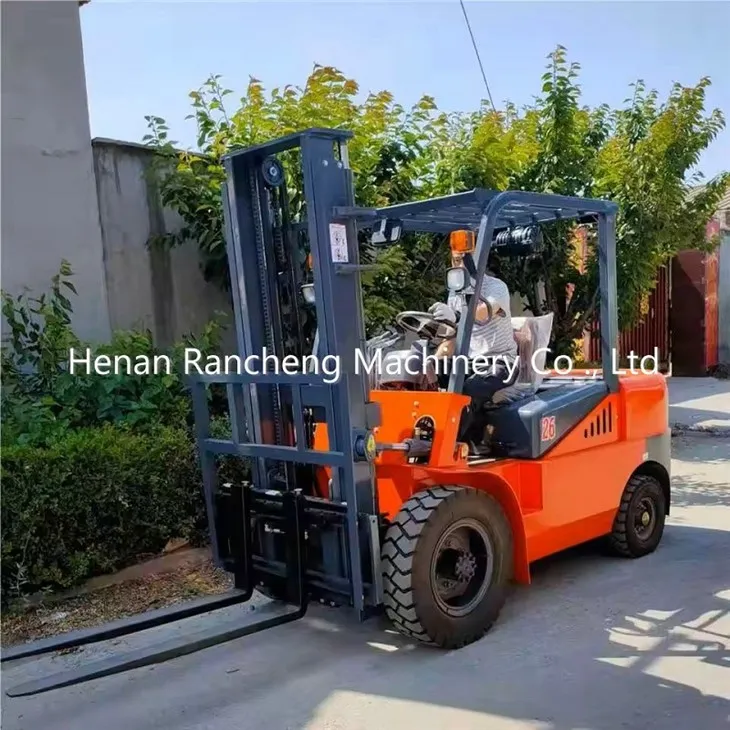
A 1.6t forklift is more suitable for large - scale operations. It can handle a wide range of tasks, including loading and unloading heavy trucks, stacking pallets in high - rise racks, and transporting goods over longer distances within a large facility. In a large manufacturing plant, a 1.6t forklift can move raw materials from the storage area to the production line and then transport finished products to the shipping area.
Which One Should You Choose?
The choice between a 1.6t forklift and a pallet jack depends on your specific needs. If you have a small - scale operation with light loads, narrow aisles, and a limited budget, a pallet jack may be the best option. It offers simplicity, affordability, and good maneuverability for basic material handling tasks.
However, if you need to handle heavier loads, stack pallets at different heights, and have a larger - scale operation, a 1.6t forklift is the better choice. It provides more power, greater lifting height, and better performance for more complex material handling tasks.
As a supplier of 1.6t forklifts, I can offer you a wide range of high - quality forklifts to meet your specific requirements. We also provide professional after - sales service and technical support to ensure that your forklift operates smoothly. If you are interested in our 5T Forklift, 2.6T Forklift or 3T Forklift, please feel free to contact us for more information and to discuss your procurement needs.
References
- "Material Handling Equipment: A Comprehensive Guide" by John Smith
- "Warehouse Operations and Logistics" by Jane Doe
- Industry reports from the Material Handling Industry of America